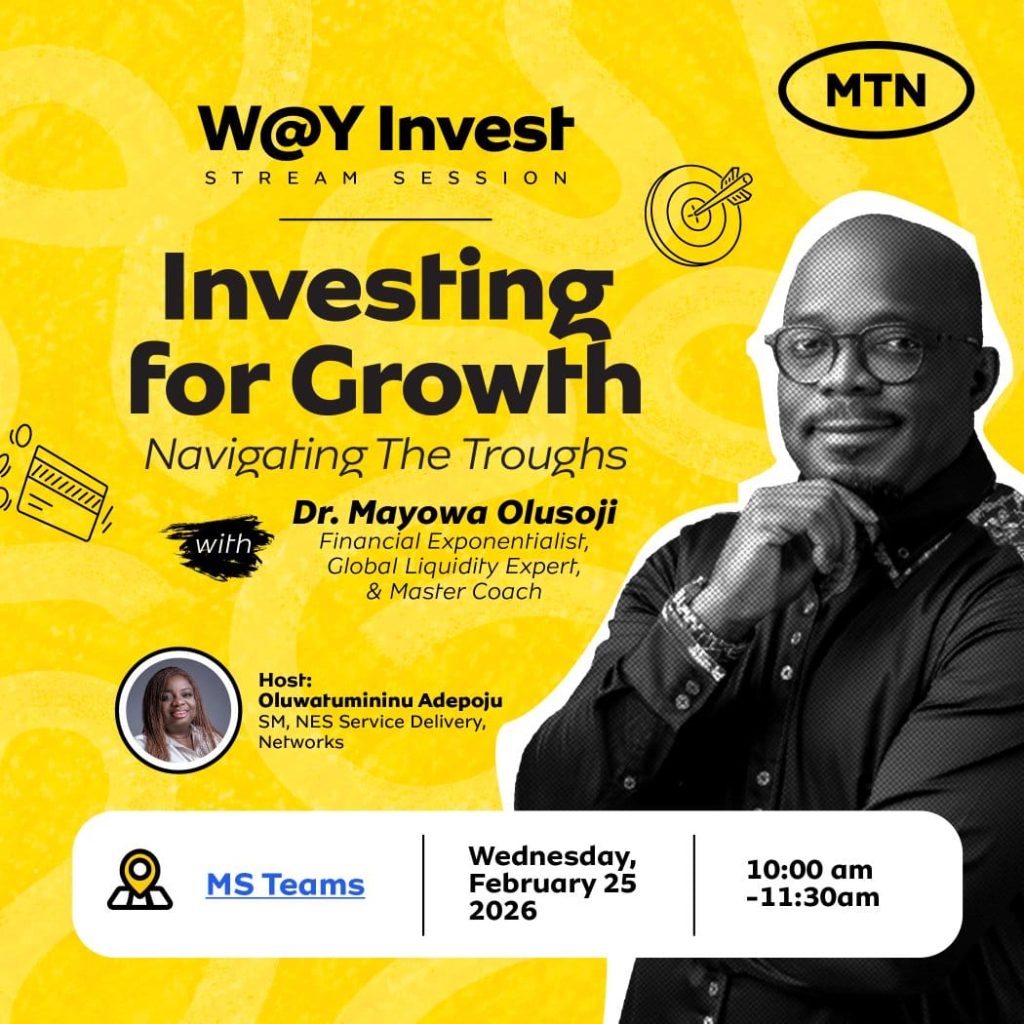
Welcome to another week of financial wisdom with your guide, CoachMO!
Do you know that you have been lied to? When you hear things like “money saved today is security for life’s unknowns,” it sounds like financial wisdom on the surface. However, when you take a closer look, it’s a different story.
This week, come on a truth-seeking journey with me. Are you ready? Let’s dive in.
The Tale of Sarah’s Stash
Meet Sarah, a diligent 30-year-old teacher with a heart full of dreams. She grew up hearing the golden rule of money: save, save, save. So, she did. Every paycheck, Sarah tucked away $200 into her savings account, proud of her growing nest egg. By 2025, she had $10,000 stashed away, enough for a down payment on a small condo, or so she thought.
But then, Sarah went shopping. The condo she eyed in 2020, priced at $150,000, now costs $180,000. Groceries that once cost $50 a week were now $60. Her favourite coffee shop latte? Up from $4 to $5.50. Sarah’s savings hadn’t grown enough to keep up. She felt betrayed. “I did everything right,” she thought. “Why does my money feel weaker?”
Sarah’s story isn’t unique. She fell victim to a silent thief: inflation and money debasement. And if you’re only saving, you might be next. Let’s unpack this together, dive into the numbers, and discover why investing, not just saving, is the key to winning the money game.
The Lie: “Saving Alone Makes You Rich”
For generations, we’ve been told to save every penny, stash it in a bank, and watch it grow. It sounds safe, secure, and responsible. But here’s the hard truth: savers are losers when inflation and money debasement are at play. Saving alone doesn’t protect your money’s value; it erodes it.
What’s Inflation?
Inflation is the rate at which prices for goods and services rise over time. It’s why Sarah’s condo, groceries, and lattes cost more today than five years ago. Inflation reduces your money’s purchasing power, which is the amount of stuff you can buy with a dollar. The U.S. Consumer Price Index (CPI), a key measure of inflation, increased to 2.8% for the 12 months ending in February 2025. That means $100 in 2024 could only buy about $97.20 worth of goods in 2025.
What’s Money Debasement?
Money debasement is when the value of money decreases due to factors like the government printing more currency or economic policies. When central banks, like the Federal Reserve, increase the money supply, each dollar’s worth shrinks. Historically, periods of monetary expansion (like post-2008 or post-COVID stimulus) have led to higher inflation, further eroding savings.
Sarah’s savings account, earning a measly 0.06% annual percentage yield (APY) on average, was no match for this duo. Let’s look at the numbers to see why.
The Numbers Don’t Lie: Savings vs. Inflation
Imagine Sarah started with $10,000 in 2020. Here’s how her money fared:
- Savings Account (0.06% APY):
The national average savings account rate is about 0.06%. Compounded annually, Sarah’s $10,000 would grow to just $10,030 by 2025. But with inflation averaging 3.4% annually from 2020 to 2024 (spiking to 7.0% in 2021 and 6.5% in 2022), her $10,030 could only buy what $8,700 could in 2020. That’s a real loss of $1,300 in purchasing power. - Inflation’s Bite:
The CPI data shows inflation outpacing savings rates consistently. For example, in 2023, inflation was 3.4%, while high-yield savings accounts offered around 1–2% APY at best. If inflation is 3% and your savings earn 1%, you’re losing 2% of your money’s value each year. Over a decade, $10,000 could lose 20–30% of its purchasing power if it just sits in a savings account. - Money Debasement in Action:
From 2020 to 2023, the U.S. money supply (M2) grew by over 25% due to pandemic-era stimulus. This fueled inflation spikes, making cash savings worth less. For instance, a loaf of bread costing $1 in 1970 costs $1.40 in 2024, and your dollar buys 0.7 loaves today.
Sarah’s savings were shrinking in value, not growing. She wasn’t building wealth; she was losing it.
The Game-Changer: Investing in ETFs
Now, let’s rewrite Sarah’s story. Instead of parking all her money in a savings account, suppose she invested in a low-cost S&P 500 ETF (exchange-traded fund) starting in 2020. ETFs are baskets of stocks that track market indices, offering diversification and lower risk than picking individual stocks.
- S&P 500 ETF Returns:
From June 2020 to May 2021 alone, an S&P 500 ETF grew by 37%, turning $1,000 into $1,370. Over the longer term, the S&P 500 has averaged about 7–10% annual returns after inflation (real returns) since the 1920s. If Sarah invested $10,000 in 2020 at an average 7% real return, her money would be worth about $14,025 by 2025, outpacing inflation and preserving her purchasing power. - ETFs vs. Savings:
Compare that to her savings account’s $10,030 (losing $1,300 in real value). An ETF like the Vanguard S&P 500 ETF (VOO) with a low expense ratio (0.03%) would have grown her money while beating inflation. Even in high-inflation years like 2021 (7.0%), stocks historically outperform cash, as companies can raise prices to match inflation, boosting their earnings. - Why ETFs Work:
ETFs like the iShares TIPS Bond ETF (TIP) or Vanguard Real Estate ETF (VNQ) are designed to hedge against inflation. Real estate ETFs benefit from rising property values and rents during inflationary periods. These options offer growth potential with moderate risk, unlike savings accounts that lag behind.
CoachMO’s Takeaway: Save, But Don’t Stop There
Don’t get me wrong, saving is critical. It’s your safety net, your emergency fund, your peace of mind.
CoachMO’s rule: keep 1–3 months of expenses in a high-yield savings account (aim for 4–5% APY if you can find it). But to build wealth, you must go beyond saving. Inflation and debasement are relentless, and they’ll eat your savings alive if you let them.
Why Invest?
Investing in ETFs or other assets lets your money work for you, outpacing inflation and growing your wealth. Stocks, especially through ETFs, have historically delivered higher returns than savings accounts, even after inflation. For example, while savings accounts lost value in real terms, the S&P 500’s long-term real return of 7% means your money could double every 10 years.
The Discipline of Wealth-Building:
- Save First: Automate your savings, set up a direct deposit to a high-yield account. Discipline starts here.
- Invest Smart: Start with low-cost, diversified ETFs like VOO. You don’t need to be a Wall Street guru; just invest consistently.
- Think Long-Term: Inflation is a marathon, not a sprint. Stay invested to ride out market dips.
- Educate Yourself: Financial literacy is your superpower. Understand how inflation, interest rates, and investments interact to make informed choices. Keep following CoachMO.
Sarah’s New Chapter
Inspired by CoachMO, Sarah took action. She kept $5,000 in a high-yield savings account for emergencies (earning 4% APY) and invested $5,000 in an S&P 500 ETF. By 2030, projections suggest her investment could grow to $7,593 at a 7% average return, while her savings account might only reach $6,083. More importantly, her investment keeps her ahead of inflation, preserving her dream of that condo.
Sarah learned the hard truth: saving alone won’t make you rich. It’s a start, but investing is the journey. Don’t let inflation steal your dreams; take control, invest wisely, and let your money grow.
CoachMO’s Challenge: Check your savings account’s APY. Is it beating inflation (2.8% as of Feb 2025)? If not, research one ETF you could invest in this month. Start small but start now!
That’s a wrap for this week, Money Mavers!
Got questions? I’ll be glad to explain further. I’m here to help you make sense of your money.
Follow me on all social media platforms for more Financial Insight and be the first to listen to our weekly podcast on Spotify https://linktr.ee/info.coachmo.
Until next time,
CoachMO
Your Financial Literacy Plug